
Last Updated: 2 June 2026
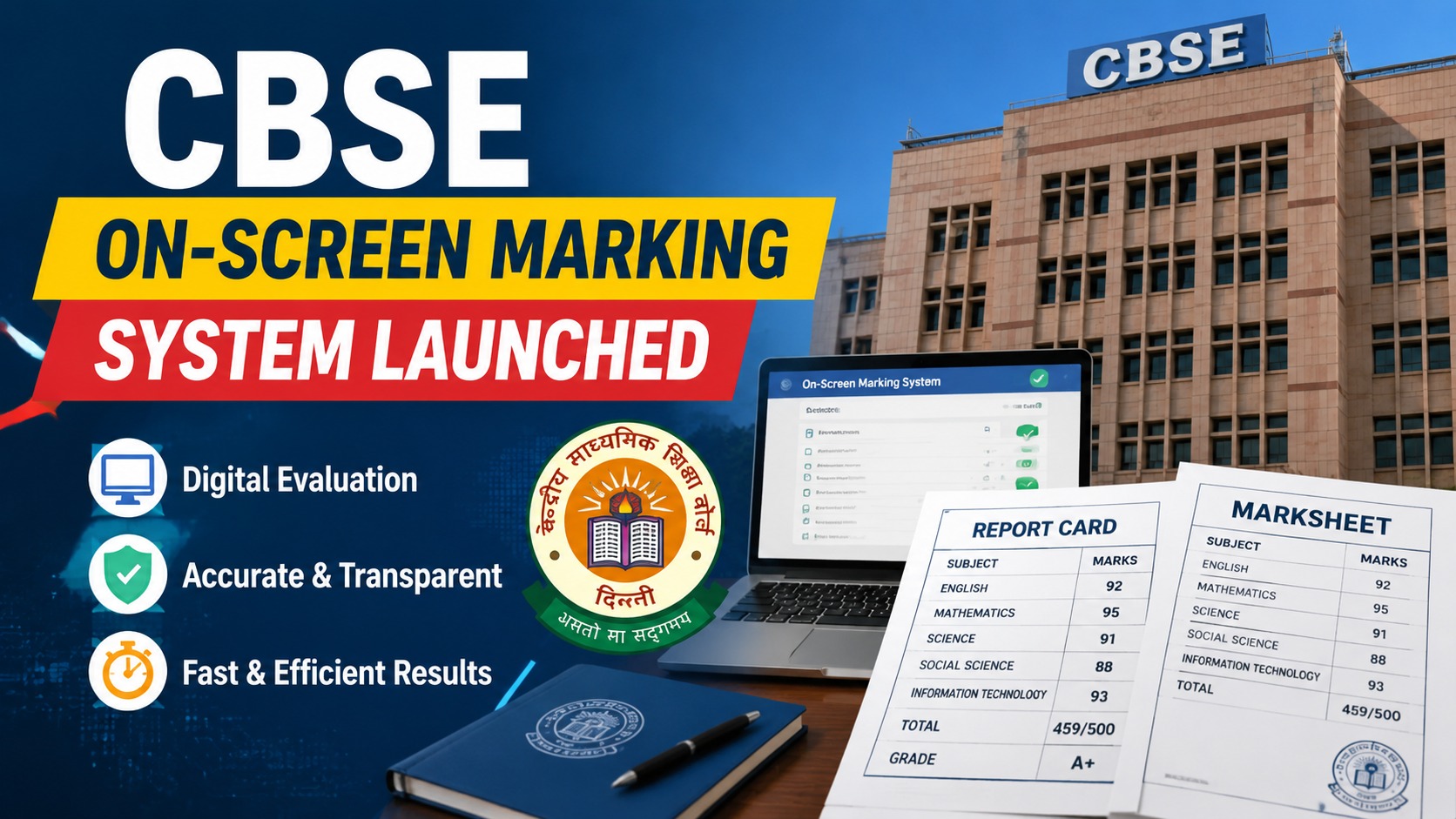
The Central Board of Secondary Education (CBSE) introduced the On-Screen Marking (OSM) system for the 2026 Class 12 board examinations as part of a broader effort to digitise answer-sheet evaluation. Under the system, physical answer books were scanned and uploaded to a digital platform, enabling examiners to assess scripts electronically.
The reform covered approximately 18.5 lakh Class 12 candidates across more than 120 subjects, according to examination data reported by CBSE and cited by multiple national media organisations between May and June 2026. While the initiative was intended to improve efficiency and standardisation, concerns emerged after results were declared regarding answer-sheet scans, portal functionality, and implementation challenges.
The issue subsequently expanded beyond examination administration, prompting discussions around cybersecurity safeguards, procurement procedures, and oversight mechanisms. Several aspects of the matter remain under official review through government and judicial processes.
Key Developments at a Glance
|
Particulars |
Reported Details |
|
Examination Session |
CBSE Class 12 Exams 2026 |
|
Evaluation Method |
On-Screen Marking (OSM) |
|
Students Appearing |
Around 18.5 lakh |
|
Service Provider |
Coempt Edu Teck Pvt Ltd |
|
Reported Contract Value |
Approximately Rs 384 crore |
|
Current Status |
Government inquiry underway |
Source Note: Information compiled from CBSE-related records, procurement documents, parliamentary proceedings, and reporting published between May and June 2026.
Evaluation-Related Complaints
Following the declaration of results, a significant number of students applied for verification and re-evaluation. According to reports published by Hindustan Times, The Indian Express, The Times of India, India Today, and other news organisations, some candidates reported blurred scans, missing pages, incomplete uploads, and discrepancies in digitised answer books.
Media reports citing officials indicated that thousands of answer sheets required rescanning, while verification requests rose substantially.
Reported Evaluation Figures
|
Category |
Reported Number |
|
Verification Applications |
Around 1.27 lakh |
|
Answer Books Under Verification |
Nearly 3.87 lakh |
|
Scripts Requiring Rescanning |
Around 70,000 |
|
Severely Blurred Scans |
More than 5,000 |
|
Mismatched Answer Books |
23 |
Source Note: Figures reported by national media organisations between May and June 2026 based on CBSE records, stakeholder statements, and official discussions. Final figures remain subject to verification through inquiry findings.
The Class 12 pass percentage was reported at 85.20% in 2026, compared with 88.39% in 2025. While the decline does not establish a direct connection to the OSM system, it contributed to wider scrutiny of the evaluation process.
Cybersecurity Concerns
The controversy gained further attention after student researcher Sarthak Sidhant and ethical hacker Nisarga Adhikary highlighted alleged vulnerabilities within the digital infrastructure supporting the OSM platform.
According to reports published by India Today, Times of India, Hindustan Times, Varindia, and other outlets, concerns were raised regarding password management, access controls, and cloud-storage configurations. Some reports suggested that examination-related information and candidate data may have been exposed through technical weaknesses.
CBSE initially stated that certain issues were linked to a testing environment. The board later acknowledged security concerns and reported that corrective measures had been implemented with support from cybersecurity experts and government agencies.
The re-evaluation portal also reportedly experienced cyberattack attempts and unusually high traffic during the application period, leading to temporary disruptions for some users.
Procurement Process Under Examination
Questions have also been raised regarding the procurement process through which Hyderabad-based Coempt Edu Teck Pvt Ltd secured the OSM contract.
According to procurement records discussed in media investigations, including reports published by Deccan Herald, Business Today, The Federal, and The South First, multiple bidding rounds took place before the final contract was awarded. Critics have argued that certain eligibility and technical requirements were revised during successive tender stages.
Reported Tender Modifications
|
Requirement |
Earlier Provision |
Later Provision |
|
Software Certification |
CMMI Level 5 |
CMMI Level 3 |
|
Scanning Resolution |
300 DPI |
200 DPI |
|
Robotic Scanners |
Required |
Removed |
|
Dedicated Servers |
Required |
Removed |
|
Blacklisting Criteria |
Broader restrictions |
Revised wording |
The government-appointed inquiry is expected to review procurement documentation and determine whether established procedures were followed.
Administrative and Legal Developments
Timeline of Key Events
|
Date |
Status |
|
February–September 2025 Tender Process |
Historical |
|
Class 12 Results 2026 |
Historical |
|
2 June 2026 Parliamentary Review |
Confirmed |
|
Government Inquiry |
Confirmed |
|
Inquiry Report Submission |
Expected |
On 2 June 2026, student whistleblower Sarthak Sidhant presented findings before the Parliamentary Standing Committee on Education. Subsequently, leadership changes were announced within CBSE.
Government communications reported the appointment of Lokhande Prashant Sitaram as CBSE Chairperson and Varun Bhardwaj as Secretary. A one-member inquiry committee headed by S. Radha Chauhan, Chairperson of the Capacity Building Commission, was also constituted to examine issues related to the procurement and implementation of the OSM project.
Meanwhile, legal proceedings concerning evaluation policies and related administrative decisions have been reported before various judicial forums. Several matters remain under consideration.
Why the Issue Matters
The OSM controversy has prompted a broader discussion about digital transformation within India’s examination system. The case highlights the importance of reliable technology infrastructure, cybersecurity preparedness, procurement transparency, and effective grievance-redressal mechanisms in large-scale public examinations.
The outcome of ongoing inquiries may influence future examination reforms, digital assessment frameworks, and technology governance practices across educational boards.
Student Safety Advisory
Students and parents should remain cautious while accessing result verification or re-evaluation services.
- Use only official CBSE portals and government websites.
- Never share OTPs, passwords, or login credentials.
- Verify payment links before making transactions.
- Avoid unofficial agents or third-party services claiming guaranteed results.
- Report suspicious messages, calls, or websites through official grievance channels.
Sources and Verification
This article is based on reporting published between May and June 2026 by national newspapers, business publications, digital news platforms, parliamentary proceedings, procurement records, court filings, and publicly available government communications. Key reporting sources include Hindustan Times, The Indian Express, The Times of India, India Today, Business Today, The Economic Times, Financial Express, The Federal, The South First, ANI, and other recognised news organisations.
Editorial Disclaimer
Information presented in this article reflects publicly reported developments available as of 2 June 2026. Several issues discussed remain under investigation or official review. Government notifications, court orders, parliamentary records, inquiry findings, and official CBSE communications shall take precedence over information contained in this article. Readers are advised to verify future updates through authorised sources.