
Last Updated: 14 June 2026
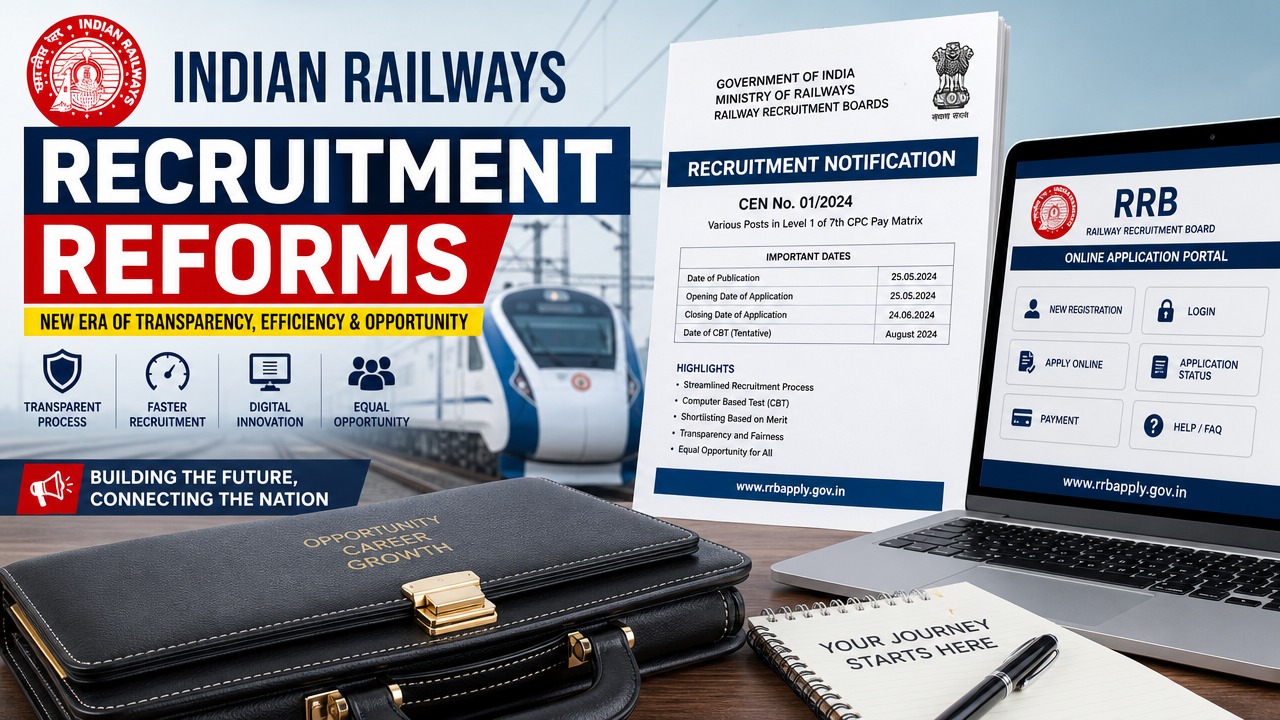
Indian Railways is implementing a major recruitment and workforce reform programme as it expands infrastructure, modernises operations and addresses staffing requirements across its network. The changes include large-scale recruitment, revisions to officer recruitment policies and the wider use of digital systems in hiring processes.
As one of India’s largest public-sector employers, Indian Railways plays a critical role in transportation, infrastructure development and employment generation. Recent recruitment and workforce decisions are therefore significant for job aspirants, existing employees and policymakers.
Recruitment Activity in FY 2025-26
According to recruitment figures reviewed by the Ministry of Railways during Railway Recruitment Board (RRB) assessments and official recruitment reviews released in FY 2025-26, approximately 43,781 candidates were recruited against 47,084 notified vacancies.
Recruitment by Category
|
Post Category |
Vacancies Notified |
|
Assistant Loco Pilots (ALP) |
18,799 |
|
Technicians |
14,298 |
|
Junior Engineers |
7,333 |
|
RPF Constables |
4,205 |
|
RPF Sub-Inspectors |
450 |
|
Paramedical Staff |
1,184 |
|
Total |
47,084 |
Source Context: Ministry of Railways recruitment reviews and RRB recruitment data available as of June 2026.
The majority of vacancies were concentrated in technical, operational and safety-related categories, reflecting ongoing staffing needs across the railway network.
IRMS Recruitment Model Revisited
Historical Background (2019)
The government introduced the Indian Railway Management Service (IRMS) in 2019 by merging multiple Group ‘A’ railway services into a unified structure. Recruitment was primarily linked to the Civil Services Examination (CSE).
Confirmed Policy Change (2025-26)
Following reviews by the Ministry of Railways and discussions involving the Union Public Service Commission (UPSC), the government decided to restore separate recruitment channels for technical and non-technical services. The decision was linked to concerns regarding the availability of specialised engineering talent required for railway operations and infrastructure projects.
Revised Recruitment Framework
|
Service Category |
Recruitment Examination |
|
Traffic, Personnel and Accounts |
Civil Services Examination (CSE) |
|
Civil Engineering |
Engineering Services Examination (ESE) |
|
Mechanical Engineering |
ESE |
|
Electrical Engineering |
ESE |
|
Signal & Telecommunication |
ESE |
|
Stores Management |
ESE |
Technology-Driven Recruitment Reforms
Indian Railways has expanded the use of digital systems to improve transparency and efficiency in recruitment.
Computer-Based Tests (CBTs) are now the standard examination format for major recruitment categories. The Ministry has also introduced an annual recruitment calendar to provide greater predictability regarding notifications and examination schedules.
|
Initiative |
Purpose |
|
Computer-Based Tests |
Standardised examinations |
|
Multi-language Exams |
Improved accessibility |
|
Annual Recruitment Calendar |
Predictable recruitment cycle |
|
Digital Verification Systems |
Faster document processing |
|
Tablet-Based Assessments |
Improved efficiency |
Expected Developments
Railway officials have discussed expanding AI-assisted monitoring, automated evaluation and enhanced digital verification systems in future recruitment cycles. These measures remain proposed initiatives and should be verified through future Railway Board notifications before being treated as confirmed policy.
Workforce Planning and Emerging Skill Requirements
As Indian Railways adopts advanced technologies such as Vande Bharat trains, Kavach signalling systems and digital maintenance platforms, workforce requirements are evolving.
Future workforce planning may place greater emphasis on:
- Data Analytics
- Artificial Intelligence
- Cybersecurity
- Automation and Robotics
- Renewable Energy Engineering
- Energy Efficiency Technologies
These areas are linked to broader modernisation and sustainability objectives within the railway sector.
Workforce Rationalisation Debate
Proposed Review (FY 2026-27)
Reports citing Railway Board workforce reviews indicate that approximately 29,608 posts have been identified for review, redistribution or surrender as part of a manpower rationalisation exercise.
Workforce Snapshot
|
Item |
Figure |
|
Sanctioned Workforce Strength |
14,80,455 |
|
Rationalisation Target |
2% |
|
Posts Identified for Review |
29,608 |
Source Context: Railway budget documents, Demand for Grants 2026-27 analysis and workforce-related reports available as of June 2026.
Railway authorities have stated that the exercise is intended to improve manpower deployment. Employee federations have expressed concerns regarding existing vacancies, particularly in operational and safety-related categories.
Recruitment Safety Advisory
Candidates should use only official Railway Recruitment Board (RRB), UPSC and Ministry of Railways portals for recruitment information.
- Do not share OTPs, passwords or banking details.
- Avoid unofficial agents or intermediaries.
- Verify recruitment notices through official government websites.
- Be cautious of calls or messages promising selection in exchange for payment.
Government recruitment agencies do not guarantee appointments for money.
Sources and Verification Note
This article is based on Ministry of Railways recruitment reviews, Railway Board communications, Parliamentary records, UPSC-related updates, Demand for Grants 2026-27 analysis, RTI-based reporting and official public documents available up to June 2026. Recruitment figures refer to FY 2025-26, while workforce rationalisation discussions relate to proposed measures for FY 2026-27.
Editorial Disclaimer
Recruitment policies, vacancy figures, workforce statistics and examination schedules may be revised through future notifications issued by the Ministry of Railways, Railway Board, UPSC or Railway Recruitment Boards. Readers should verify the latest information through official government sources. In the event of any discrepancy, official notifications, circulars and government records shall prevail.