
Last Updated: July 1, 2026
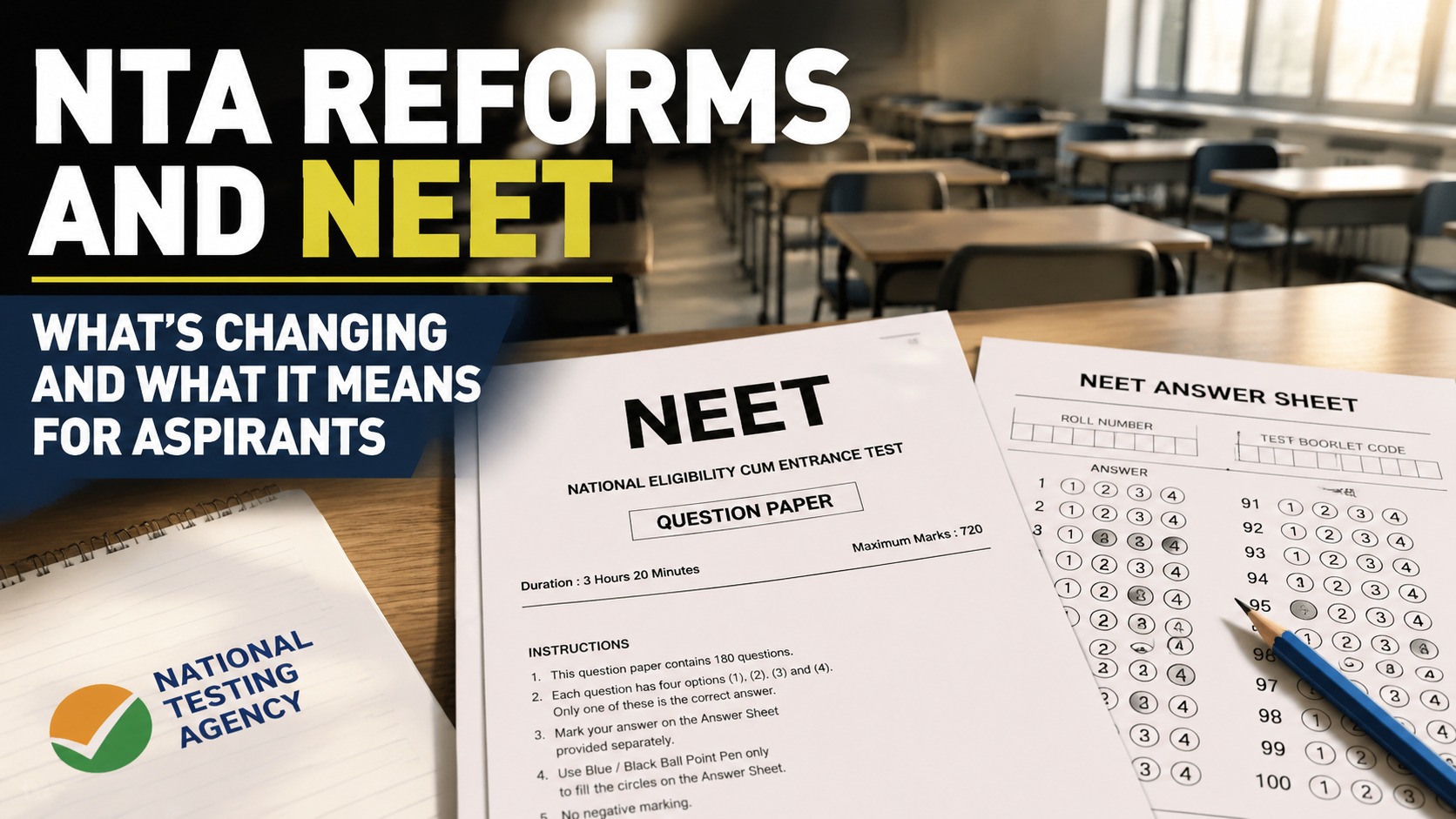
The Parliamentary Standing Committee on Education, Women, Children, Youth and Sports is scheduled to meet on July 1, 2026, to review ongoing reforms in the National Testing Agency (NTA) following the recent NEET-UG re-examination. The meeting is part of the government’s broader effort to strengthen India’s examination system after concerns raised by the NEET paper leak case.
Senior officials from the Ministry of Education, the NTA, and the government’s examination reform committee are expected to brief the panel on the progress of proposed reforms, lessons from the NEET re-test, and the role of Artificial Intelligence (AI) in education. The committee’s deliberations may contribute to future policy decisions, but any reforms will take effect only after approval by the competent authority and publication through official notifications.
As the NTA conducts several national entrance examinations for admissions to higher education institutions, discussions on examination governance, security, and transparency have implications for candidates, educational institutions, and the credibility of the admission process.
Meeting Overview
|
Particular |
Details |
|
Meeting Date (Confirmed) |
July 1, 2026 |
|
Parliamentary Body |
Standing Committee on Education, Women, Children, Youth and Sports |
|
Chairperson |
Mukul Wasnik |
|
Primary Agenda |
NTA reforms, NEET-UG re-test review, AI in education |
|
Officials Expected |
Dr. K. Radhakrishnan, Abhishek Singh, Dr. Vineet Joshi |
Reform Roadmap to Be Reviewed
Former ISRO Chairman Dr. K. Radhakrishnan, who heads the government’s high-powered committee on examination reforms, is expected to present an update on recommendations aimed at strengthening the National Testing Agency. The presentation is likely to explain the progress made on reforms proposed after the 2024 NEET controversy.
Members are expected to examine measures related to examination security, operational efficiency, transparency, governance, and institutional capacity. The review will assess the implementation status of these recommendations and identify areas where further improvements may be required.
NEET-UG Re-Test Under Review
The committee is also expected to assess the NEET-UG re-examination conducted on June 21, 2026.
NTA Director General Abhishek Singh is likely to brief members on the conduct of the re-test, the safeguards introduced during the examination, and the operational experience gained from the exercise. Higher Education Secretary Dr. Vineet Joshi is also expected to participate in the discussions.
The review aims to evaluate whether additional administrative or technological safeguards are required before future national entrance examinations.
Key Discussion Areas
|
Topic |
Current Status |
|
NTA reform roadmap |
Under parliamentary review |
|
NEET-UG re-test findings |
To be presented |
|
Examination security |
Ongoing policy discussion |
|
Artificial Intelligence in education |
Expert consultation |
|
Future examination model |
Under consideration |
AI and Education Policy
The committee’s afternoon session will focus on Artificial Intelligence and its potential role in education and employability.
Experts, including Professor Arun C. Mehta, Professor T. G. Sitharam, representatives from the Delhi School of Artificial Intelligence, and Sarvam AI, are expected to discuss how AI could support teaching, learning, assessment, and workforce readiness. The session is also likely to examine issues related to digital infrastructure, responsible AI adoption, and implementation challenges.
Previous Parliamentary Reviews
The July 1 meeting follows several parliamentary discussions held after the alleged NEET-UG 2026 paper leak.
During the committee meeting held on May 21, 2026 (Historical), NTA officials responded to questions regarding the incident. According to parliamentary proceedings, the agency informed members that the paper had not been leaked through its internal systems. Officials also stated that proposals such as limiting the number of examination attempts, introducing an upper age limit, and gradually adopting Computer-Based Testing (CBT) were under consideration. These proposals have not been notified as official policy.
A subsequent meeting on June 1, 2026 (Historical) examined the advantages and operational challenges of pen-and-paper examinations compared with CBT. Discussions focused on examination integrity, accessibility, cybersecurity, and infrastructure.
Separately, the Rajya Sabha Committee on Government Assurances sought updates from the Ministry of Education, the NTA, and the Central Bureau of Investigation (CBI) regarding the ongoing investigation into the paper leak case.
Timeline of Key Developments
|
Date |
Status |
Development |
|
December 2025 |
Historical |
371st Report of the Parliamentary Standing Committee on Education tabled |
|
May 3, 2026 |
Historical |
NEET-UG paper leak controversy reported |
|
May 21, 2026 |
Historical |
Parliamentary panel reviewed the issue with NTA officials |
|
May 27, 2026 |
Historical |
Committee on Government Assurances sought investigation updates |
|
June 1, 2026 |
Historical |
Discussion on examination formats, including CBT |
|
June 21, 2026 |
Confirmed |
NEET-UG re-examination conducted |
|
July 1, 2026 |
Confirmed |
Parliamentary review of NTA reforms and NEET re-test |
Key Observations from the 371st Report
The 371st Report of the Parliamentary Standing Committee on Education, presented in December 2025, highlighted concerns regarding the functioning of the National Testing Agency.
The report noted disruptions in several national examinations conducted during 2024 and recommended strengthening institutional accountability, improving examination management systems, and enhancing procurement practices. It also recommended creating a national database of blacklisted vendors after observing that some firms associated with examination-related work had reportedly been blacklisted by certain organisations.
Examination Format Remains Under Consideration
Whether NEET should gradually transition to Computer-Based Testing (CBT) remains under policy consideration rather than being a confirmed decision.
While the government-appointed reform committee has recommended exploring hybrid and computer-based examination models, the Parliamentary Standing Committee has highlighted the need to address cybersecurity, digital infrastructure, and equitable access before implementing any large-scale transition.
No official notification has announced a final decision on the future examination format for NEET.
What Happens Next?
The committee’s recommendations are expected to be examined by the Ministry of Education before any policy decisions are taken. If approved, reforms would be implemented through official notifications or regulatory directions issued by the competent authority. Candidates and institutions should therefore rely only on confirmed government announcements rather than proposals discussed during committee meetings.
Safety Advisory
Readers should rely only on information published by the National Testing Agency (NTA), the Ministry of Education, official Parliamentary records, or the Press Information Bureau (PIB). Government authorities do not seek payments for examination reforms or policy approvals. Avoid unofficial websites, social media rumours, and unsolicited calls or messages. Never share OTPs, passwords, login credentials, or personal documents with unknown individuals claiming to provide examination-related assistance.
Source Note
This article is based on publicly available information from the Parliamentary Standing Committee agenda for July 1, 2026, the 371st Report of the Parliamentary Standing Committee on Education (December 2025), Ministry of Education communications, National Testing Agency notices, Rajya Sabha proceedings, Press Information Bureau (PIB) releases, and other official government records accessed on July 1, 2026. Media reports have been used only to provide additional reporting context where appropriate.
Disclaimer
The information presented in this article reflects official records and publicly available government communications available on July 1, 2026. Committee discussions, recommendations, and proposals should not be interpreted as final government policy unless subsequently notified by the competent authority. Readers are advised to verify the latest updates through official notifications issued by the Ministry of Education and the National Testing Agency before relying on policy-related information.