
Last Updated: June 2026
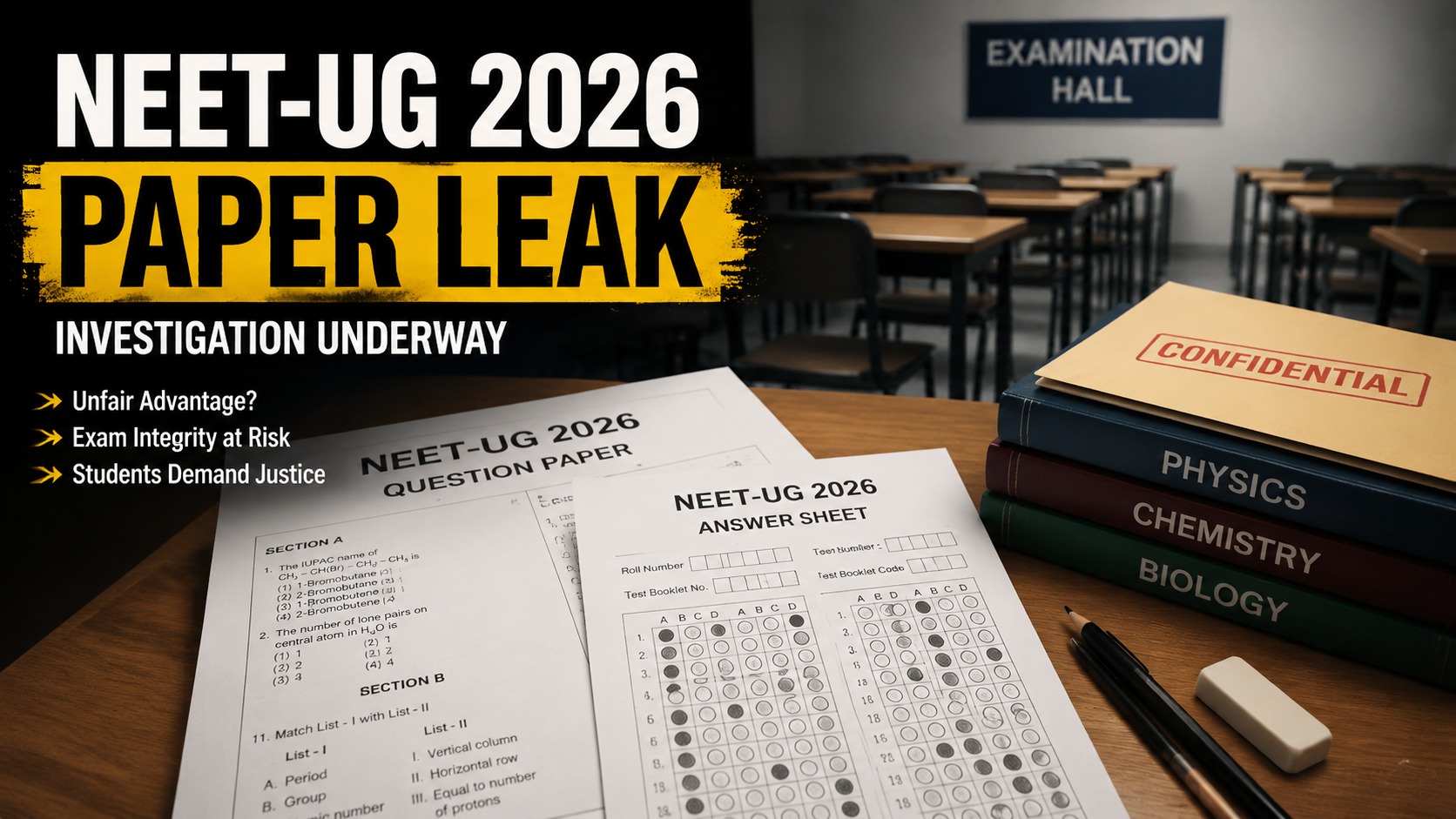
The National Eligibility-cum-Entrance Test (NEET-UG) 2026 and the Central Board of Secondary Education’s (CBSE) On-Screen Marking (OSM) system have become the focus of investigations and policy discussions following reports of examination-related irregularities and concerns about digital evaluation processes.
The developments have drawn attention from investigative agencies, Parliament, and the judiciary. As official inquiries continue, education authorities are reviewing examination security, governance mechanisms, and technology-driven assessment systems that affect millions of candidates across India.
Key Timeline of Events
|
Date Status |
Event |
|
Historical |
Public Examinations (Prevention of Unfair Means) Act came into effect on June 21, 2024 |
|
Historical |
NEET-UG 2026 conducted on May 3, 2026 |
|
Confirmed |
NTA announced cancellation of the examination on May 12, 2026 through an official public notice |
|
Confirmed |
Re-examination scheduled for June 21, 2026 |
|
Ongoing |
CBI and Enforcement Directorate investigations |
|
Ongoing |
Parliamentary review of examination governance and security measures |
Verification Note: Readers should refer to the latest NTA notices, Ministry of Education communications, and court records for any updates to examination schedules or administrative decisions.
NEET-UG 2026 Investigation
Following the examination, reports emerged that a set of questions had circulated online before the test. The National Testing Agency (NTA) initially stated that the material being shared was a “guess paper” and not evidence of a paper leak.
Subsequently, Rajasthan Police’s Special Operations Group (SOG) examined the matter before the case was transferred to the Central Bureau of Investigation (CBI). According to investigation updates reported by national media outlets and agency statements, authorities are examining whether examination content was accessed and circulated before the test.
Individuals Named in Investigation Reports
|
Name |
Status Reported by Investigating Agencies |
|
P.V. Kulkarni |
Under investigation regarding alleged access to examination content |
|
Manisha Sanjay Havaldar |
Arrested by the CBI during the investigation |
|
Shubham Khairnar |
Allegedly linked to circulation of examination material |
|
Shivraj Motegaonkar |
Named in ongoing investigation reports |
|
Manoj Shirure |
Named in agency investigations |
Legal Note: All allegations remain subject to investigation and judicial review. The inclusion of names reflects publicly reported investigative actions and does not imply guilt.
Supreme Court and Parliamentary Review
The cancellation of NEET-UG affected a large number of candidates. According to examination-cycle data released by the NTA and reported during the 2026 admission process, registrations exceeded 22 lakh candidates. Readers should verify the latest figures through official NTA records and public notices.
The matter subsequently reached the Supreme Court, where examination security and accountability measures were discussed during hearings. Parliamentary scrutiny also followed, with the Parliamentary Standing Committee on Education seeking information regarding examination security practices, staffing patterns, and administrative processes within the NTA.
Committee members reportedly requested details regarding previous examination irregularities and the implementation status of recommended reforms.
Governance and Reform Discussions
The developments have renewed attention on recommendations made by the committee chaired by former ISRO Chairman K. Radhakrishnan following earlier examination controversies.
Areas Under Review
|
Area |
Focus of Discussion |
|
Staffing |
Organisational capacity and workforce structure |
|
Security |
Examination monitoring and prevention systems |
|
Reforms |
Status of committee recommendations |
|
Operations |
Use of outsourced functions |
|
Governance |
Accountability and oversight mechanisms |
In affidavits filed before the Supreme Court and public statements, the NTA stated that additional safeguards have been introduced, including biometric verification, AI-assisted CCTV monitoring, facial authentication systems, and mobile signal jammers at examination centres.
CBSE’s On-Screen Marking System
Alongside the NEET-UG investigation, CBSE’s On-Screen Marking system has come under review following reports concerning procurement procedures, software testing, and evaluation processes.
The issue gained attention after students and independent researchers highlighted concerns regarding the functioning of the evaluation platform. Subsequent media reports examined tender modifications, procurement decisions, and software testing practices.
Main Areas Being Examined
|
Area |
Reported Concern |
|
Procurement Process |
Tender-related changes and eligibility criteria |
|
Software Testing |
Issues reportedly identified during trial runs |
|
Evaluation Platform |
Operational and implementation concerns |
|
Vendor Selection |
Questions raised during parliamentary discussions |
|
Oversight |
Transparency and compliance procedures |
CBSE has stated that its procurement and evaluation procedures were conducted in accordance with applicable rules and guidelines. Reviews and inquiries into the matter remain ongoing.
Public Examinations Act, 2024
The ongoing discussions have also highlighted the Public Examinations (Prevention of Unfair Means) Act, 2024, enacted to address organised examination malpractice.
|
Provision |
Details |
|
Coverage |
Paper leaks, hacking, impersonation and organised malpractice |
|
Punishment |
5 to 10 years imprisonment |
|
Financial Penalty |
Minimum fine of ₹1 crore in specified cases |
|
Focus |
Organised offenders and service providers |
|
Objective |
Protect the integrity of public examinations |
Candidate Safety Advisory
- Use only official NTA, CBSE, and Ministry of Education portals for updates.
- Do not trust claims regarding leaked papers or guaranteed examination access.
- Never share OTPs, passwords, Aadhaar details, or login credentials.
- Avoid making payments to unofficial agents or intermediaries.
- Verify notices and announcements through official websites before taking action.
- Report suspicious messages, websites, or calls to the relevant authorities.
Official Sources for Verification
Readers may verify information through:
- NTA public notices and affidavits
- CBSE circulars and official statements
- Ministry of Education communications
- Supreme Court orders and case records
- Parliamentary Standing Committee proceedings
- CBI and Enforcement Directorate statements
Editorial Disclaimer
This article is intended for informational purposes only. Investigations, legal proceedings, and administrative reviews discussed in this report remain ongoing. Information may change based on official notifications, court orders, agency findings, or government communications. Readers should verify the latest updates through official sources. In the event of any discrepancy, official records and notifications shall prevail.
Conclusion
The NEET-UG 2026 investigation and the review of CBSE’s OSM system have prompted wider discussions on examination security, digital evaluation, and institutional accountability. As inquiries continue, findings from investigative agencies, courts, and parliamentary bodies may influence future reforms in India’s examination framework. Readers should follow official updates issued by the NTA, CBSE, Ministry of Education, and relevant courts for the latest verified developments.