
Last Updated: 30 May 2026
Key Highlights
|
Topic |
Latest Update |
|
NEET-UG Format |
Computer-Based Test (CBT) proposed from 2027 |
|
Source Context |
NTA affidavit submitted before the Supreme Court |
|
Reform Committee |
High-Level Committee chaired by Dr. K. Radhakrishnan |
|
Candidate Verification |
DIGI-EXAM system recommended |
|
Transparency Measures |
NEET-PG score and evaluation disclosures directed |
|
Current Status |
Several reforms remain under government review |
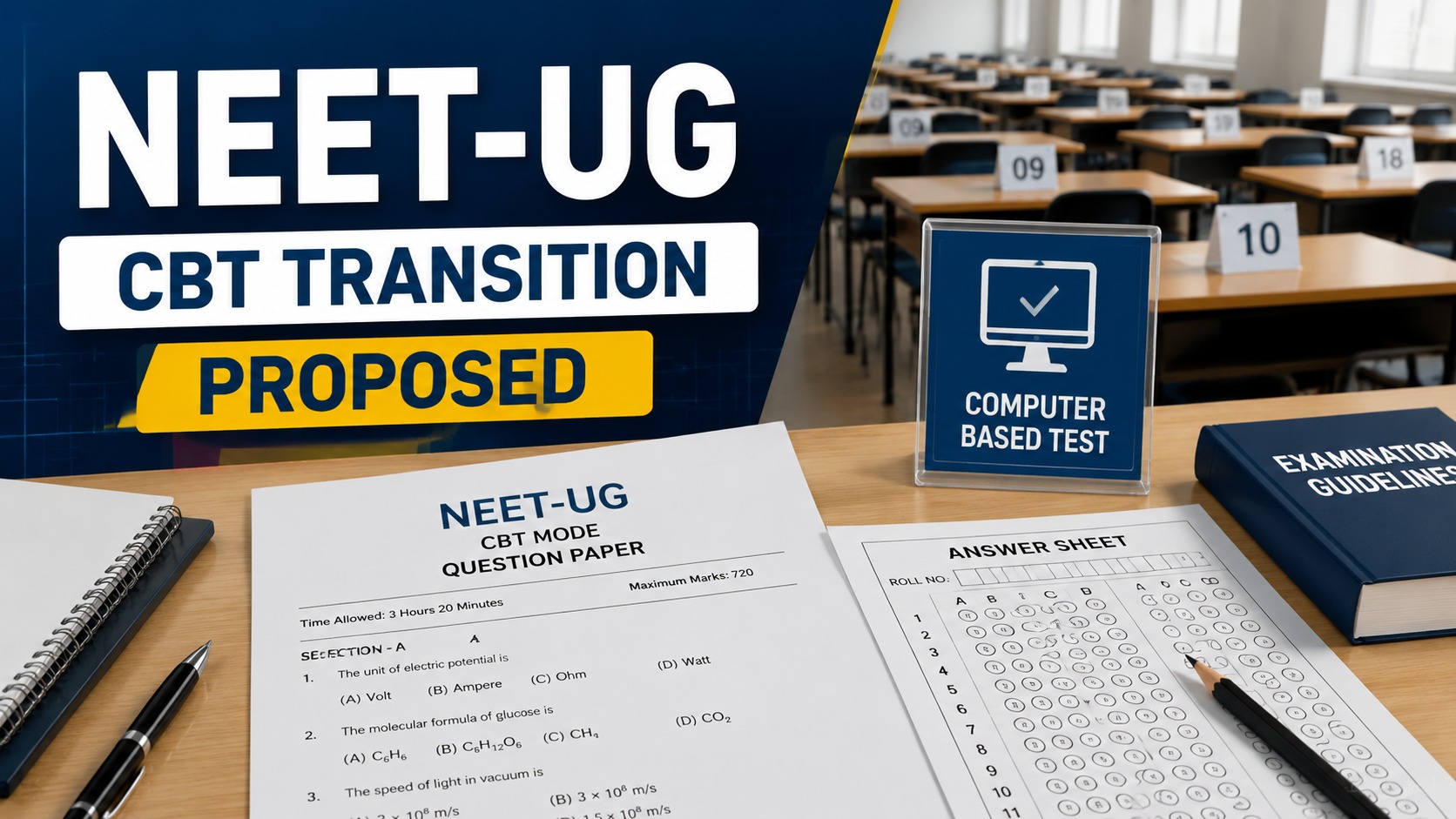
India’s medical entrance examination framework may undergo significant changes after the National Testing Agency (NTA) informed the Supreme Court that NEET-UG is proposed to transition to a Computer-Based Test (CBT) format from 2027.
The proposal was referenced in proceedings before a Supreme Court bench comprising Justices P.S. Narasimha and Alok Aradhe. It forms part of a wider reform discussion that followed concerns regarding examination security, administration, and transparency. The proposed changes are also linked to recommendations made by the High-Level Committee of Experts chaired by former ISRO Chairman Dr. K. Radhakrishnan.
As NEET is the primary entrance examination for undergraduate medical admissions across India, any modification to its format could affect future candidates, educational institutions, and examination authorities.
Reform Timeline
|
Status |
Development |
|
Historical |
Examination processes reviewed following security concerns and paper leak allegations |
|
Confirmed |
NTA informed the Supreme Court about proposed reforms |
|
Under Review |
Recommendations submitted by the Radhakrishnan Committee |
|
Expected |
Proposed CBT-based NEET-UG from 2027 |
Major Recommendations Under Consideration
|
Reform Area |
Status |
|
Computer-Based Testing |
Proposed |
|
DIGI-EXAM Verification |
Recommended |
|
AI-Assisted Translation |
Proposed |
|
Multi-Session Testing |
Under Consideration |
|
District-Level Test Centres |
Recommended |
|
NTA Governance Reforms |
Recommended |
According to publicly reported details of the NTA’s affidavit, the agency is examining a transition to CBT in consultation with the Ministry of Health and Family Welfare and other stakeholders. The NTA has noted that several national-level examinations are already conducted through digital platforms.
The expert committee also recommended the DIGI-EXAM system to strengthen candidate verification and reduce the risk of impersonation. Other proposals include expanding secure testing infrastructure across districts and exploring mobile testing centres for remote areas.
Supreme Court Emphasis on Transparency
In separate proceedings concerning NEET-PG, the Supreme Court directed authorities to improve transparency in examination and counselling processes.
|
Measure |
Intended Objective |
|
Publication of Raw Scores |
Improve transparency |
|
Release of Answer Keys |
Enhance accountability |
|
Disclosure of Normalisation Formulae |
Increase evaluation clarity |
|
Aadhaar-Based Tracking |
Strengthen counselling oversight |
These directions aim to improve understanding of the admission process and support greater confidence in examination-related systems.
Why the Reforms Matter
The proposed changes reflect a broader effort to strengthen the administration of large-scale entrance examinations. Supporters of CBT-based testing point to improved monitoring and operational efficiency, while experts have highlighted the need for adequate digital infrastructure, cybersecurity safeguards, and accessibility for candidates across different regions.
The recommendation to establish district-level testing facilities reflects ongoing concerns about equitable access, particularly for candidates from rural and remote areas.
What Happens Next?
Several recommendations remain under review and have not yet been formally implemented. Future decisions regarding examination format, testing infrastructure, and operational procedures are expected to depend on government approval and subsequent notifications issued by the NTA and relevant ministries.
Important Advisory for Candidates
- Follow updates only through official NTA and Ministry of Education platforms.
- Do not share OTPs, passwords, login credentials, or personal documents with unauthorised individuals.
- Verify notices before making payments or submitting information.
- Avoid relying on unofficial counselling agents or unverified websites.
- Government authorities do not seek examination approvals through unofficial payment requests.
Official Sources for Verification
- National Testing Agency (NTA)
- Ministry of Education
- Supreme Court orders and proceedings
- High-Level Committee of Experts (Radhakrishnan Committee)
- Official examination information bulletins
Conclusion
The proposed transition of NEET-UG to a computer-based format from 2027 marks an important stage in the ongoing discussion around examination reforms in India. However, several recommendations remain under consideration, and implementation timelines should be treated as provisional until confirmed through official notifications.
Disclaimer: This article is based on publicly reported information, Supreme Court proceedings, NTA submissions, and committee recommendations available as of 30 May 2026. Examination policies, timelines, and implementation decisions may change. Official notifications issued by the NTA, Ministry of Education, Supreme Court, and other competent authorities shall prevail over information contained in this article.